A Groundbreaking New Treatment Option for Managing High Blood Pressure
Sep 24, 2026 04:30AM ● By Family Features
(Feature Impact) Almost half of all adults in the United States are living with hypertension, or high blood pressure, according to estimates from Million Hearts, putting patients at risk for heart disease and stroke.*†
Yet for millions, controlling it remains a challenge. In the U.S., approximately 50% of patients living with hypertension who are already taking multiple antihypertensive medications may struggle with elevated blood pressure,‡ according to research published in “Hypertension,” leaving them at continued risk for serious complications, including heart damage and stroke.
Why Lowering Blood Pressure Matters
Getting blood pressure under control is critical, as it can significantly reduce health risks, based on research published in “Lancet.” Updated guidelines from the American Heart Association and the American College of Cardiology define blood pressure below 120/80 mm Hg as normal and recommend maintaining levels below 130/80 mm Hg to lower the risk of cardiovascular disease and premature death.
“High blood pressure is one of the most important modifiable risk factors for cardiovascular disease, yet many patients remain above goal despite treatment,” said Craig Beavers, PharmD, a cardiovascular clinical pharmacist at Baptist Health System who works with AstraZeneca on hypertension awareness initiatives. “Achieving better blood pressure control can significantly reduce the risk of heart attack, stroke, heart failure and other serious complications.”
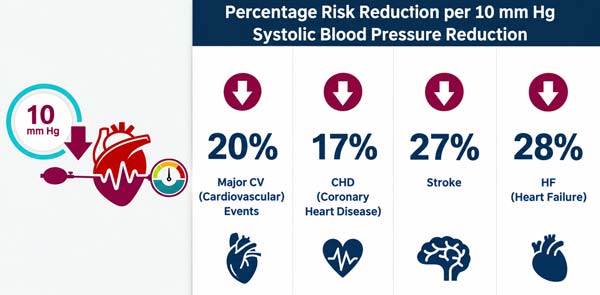
The research published in “Lancet” found each 10 mm Hg reduction in systolic blood pressure can reduce stroke risk by 27%, heart failure risk by 28%, risk of coronary heart disease by 17% and risk of major cardiovascular events by 20%.§
A separate study published in “Lancet” showed increased nighttime blood pressure is associated with higher cardiovascular risk, highlighting the importance of overnight blood pressure control. Patients should work with their healthcare providers to set appropriate blood pressure goals based on their individual health needs.
Why Some Patients Still Struggle
For many patients, getting blood pressure under control is not always straightforward.
“Many patients are already taking multiple medications and making recommended lifestyle changes, yet their blood pressure remains elevated,” Beavers said. “In these cases, there may be underlying physiological drivers contributing to hypertension that require a different therapeutic approach.”
Healthcare providers, including physicians, advanced practice clinicians, pharmacists and other members of the care team, often work together to manage high blood pressure by monitoring treatment response and optimizing medications. Still, many patients struggle to reach guideline-recommended blood pressure levels despite ongoing treatment, and multiple studies show treatment options for uncontrolled hypertension have changed little in the past two decades.
A New Approach Targeting a Hormone
Increasingly, research like that published in the “American Journal of Hypertension” shows aldosterone, a hormone produced by the adrenal glands, helps regulate salt, water and potassium levels, but its effects extend beyond fluid balance. Aldosterone can also promote inflammation and fibrosis in the heart and blood vessels, contributing to elevated blood pressure and increasing cardiovascular risk.
BAXFENDY® (baxdrostat) is a prescription medicine used along with other blood pressure medicines to treat hypertension in adults whose blood pressure is not well controlled with other medicines. It is the first FDA-approved, highly selective aldosterone synthase inhibitor, and works by targeting the production of aldosterone. Addressing this underlying driver of hypertension offers a new option for patients whose blood pressure remains uncontrolled despite taking other medications. When added to other hypertension medications, itwas shown to reduce systolic blood pressure by nearly 10 points.II
“For years, treatment options for patients with uncontrolled hypertension have remained relatively unchanged,” Beavers said. “The availability of a therapy that selectively targets aldosterone production provides healthcare teams with a new way to address a key biological pathway associated with elevated blood pressure.”
Experts emphasize that patients who are not meeting their blood pressure goals should continue consulting their healthcare providers about treatment options, as not all treatments are appropriate for every patient.
If you are taking two or more medicines and your blood pressure is still high, talk to your healthcare provider about your options, including whether a prescription medicationmay be appropriate for you. To learn more, visit Baxfendy.com.
*HTN prevalence and control estimates among US adults ≥18 years of age, applying criteria from the ACC/AHA 2017 HTN Clinical Practice Guideline and utilizing data sourced by NHANES 2017–2020.
†BP ≥130/80 mm Hg or currently using antihypertensive medication.
‡Based on an analysis of data from the 2009-2014 US National Health and Nutrition Examination Survey (NHANES). Analysis was restricted to participants aged ≥20 years who self-reported taking antihypertensive medication, had >1 class of antihypertensive medication identified during a pill bottle review conducted as part of the NHANES examination and had blood pressure measurements obtained during their study exam (N=4158). The primary purpose of the study was to compare the prevalence and characteristics of adults with aTRH (apparent treatment-resistant hypertension) using the definitions in the 2018 versus the 2008 AHA Scientific Statement. The data used are based on the definition of uncontrolled HTN (defined as blood pressure ≥130/80 mm Hg) from the 2018 AHA Scientific Statement.
§Systematic review and meta-analysis of 123 randomized trials (published between 1966 and 2015) that evaluated the effects of blood pressure lowering on CV disease and mortality across various baseline blood pressure levels and comorbidities in 613,815 participants.
IIIn a clinical study of 794 adults with high blood pressure, participants were already taking two or more medicines but still had high blood pressure. They were given either BAXFENDY(1 mg or 2 mg) or a placebo once daily for 12 weeks. Researchers then measured how much patients’ blood pressure changed.
US-115228 Last Updated 8/26
Important Safety Information for BAXFENDY® (baxdrostat)
What are the possible side effects of BAXFENDY?
BAXFENDY may cause side effects, including:
- Increased potassium levels in your blood (hyperkalemia). Your risk of developing hyperkalemia is increased if you are 65 years of age or older, have diabetes or kidney problems or take other medicines that can increase potassium levels. Talk to your healthcare provider before using potassium supplements or salt substitutes that contain potassium during your treatment with BAXFENDY
- Decreased sodium levels in your blood (hyponatremia). Your risk of developing hyponatremia is increased if you already have a low sodium blood level or take medicines that can cause hyponatremia. Tell your healthcare provider right away if you have any symptoms of low sodium levels during treatment. Symptoms of low sodium levels in your blood may include unusual fatigue, dizziness, headache, shortness of breath, or confusion
Your healthcare provider will check potassium and sodium levels in your blood before treatment with BAXFENDY and periodically during your treatment. Your healthcare provider may temporarily stop your treatment with BAXFENDY if you develop high potassium or low sodium levels in your blood.
The most common side effect is hyperkalemia. Other common side effects include low blood pressure, dizziness, and muscle spasms.
What should I tell my healthcare provider before taking BAXFENDY?
Before taking BAXFENDY, tell your healthcare provider if you:
- have high potassium levels in your blood
- have kidney problems
- have diabetes
- are pregnant or plan to become pregnant. It is not known if BAXFENDY can harm your unborn baby
- are breastfeeding or plan to breastfeed. It is not known if BAXFENDY passes into your breast milk. Talk to your healthcare provider about the best way to feed your baby during treatment with BAXFENDY
- about all the medicines you take, including prescription and over-the-counter medicines, vitamins, and supplements
Approved Uses for BAXFENDY
BAXFENDY is a prescription medicine used along with other blood pressure medicines to treat high blood pressure (hypertension) in adults whose blood pressure is not well controlled with other medicines.
Please see Prescribing Information and Patient Information for BAXFENDY.

